
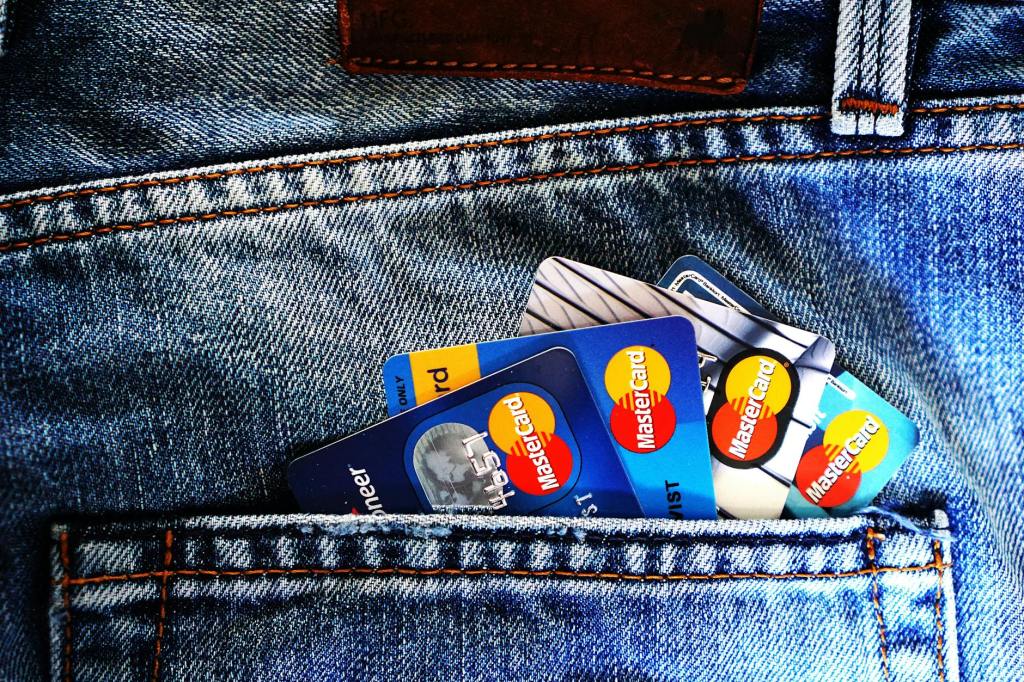
Credit card debt is the worst. I get it. Whether you had to use your credit card for emergencies or got carried away with online shopping, you are now facing a long road of trying to get out of a hole that you may have unintentionally created.
Without further ado, let’s dive into Five Simple Steps to Conquer Your Credit Card Debt and get you one step closer to financial freedom.
The definition of debt is “something, typically money, that is owed or due.” In other words, you borrowed money from a credit lender and now have to repay it.
1: Calculate What’s Owed?

Login to all of your credit card accounts and review your statements. Your statement will tell you exactly how much you owe on the card, your interest rate, and your due date. The goal is to get rid of all debt with a high interest rate (typically anything over 10%).
Why?
- High rates mean more money to the lender and less in your pocket.
- It could take you longer to pay the car off because the amount is increasing.
- Debt is the killer of wealth and financial freedom.
Mama’s Money Reset offers a Free Expense Tracker when you sign up for our email list. Our expense tracker helps with creating a spending plan, tracking needs, wants, and debt, and helps you put a plan in place to start saving.
2: Sacrifice and Planning

Sacrifice:
This step is important because you have to ask yourself,
- Are you willing to stop dining out and stick to the grocery budget you made for the pay period?
- Are you willing to cancel your music subscription and listen to the free version with ads?
- Are you willing to get a second source of income to pay down your debt faster?
- Are you willing to tell yourself NO and stand on that for at least 3 to 6 months?
Credit card debt can feel like you are drowning with no life vest if you aren’t disciplined. Here are a few steps to help create a plan moving forward.
Plan:
- Calculate the total amount owed.
- Determine a realistic payoff date.
- Choose your pay-off style. Avalanche or Snowball Method
- Cut unnecessary spending.
- Stick to a debit card or cash and put your credit card in a drawer to avoid using it.
- Bring in additional income to help pay down the card(s) faster.
- Celebrate all wins, big or small.
Making sacrifices, having a plan in place, and knowing how your dollars are being spent are key to paying off any form of debt.
3: Make More Money

Sounds easy enough, right?
Ok, this one may be a little more difficult for some than others, but I got you.
Earning extra income can come in many forms, such as asking for a raise, getting a side gig, taking online surveys, selling digital products, making and selling hand-made goods, and more.
If you’ve been with your employer for a while, take that leap and ask for a raise, go for that higher position, learn new transferable skills, or take on extra overtime (OT). All of that extra income can be thrown at your credit card debt to help relieve some of that pressure faster.
Think of it this way: when you bring in more money that wasn’t already calculated into your budget it’s considered extra, so you really shouldn’t miss it if you put it all towards debt.
4: Start Attacking

Now that you know how much you owe, your desired payoff timeline, and how to bring in some extra cash, it’s time to start attacking the debt.
What does it mean to Attack Your Debt?
I’ll give you an example. I had a credit card with a high interest rate of about 26% with a balance of $1,000. Additionally, I had another card with a balance of $400 and a 0% introductory interest rate for a few more months in that year.
I picked up a side gig with Amazon Flex, delivering packages, and then I decided to do a variation of the snowball method, which is to pay off the lowest balance first instead of the highest interest rate. You may be saying, “That’s crazy,” because the lower balance has a 0% percent interest rate, and technically you’re right, but I thought about two things.
The amount my interest rate would go to when the promotion was over, and simply having the instant gratification of being able to fully pay off a card.
I calculated how many shifts I needed to pick up to pay off that $400 balance in 30 days. This led to about one to two shifts a week or more if I wanted to pay it off faster. I buckled down, packed my son up in the car with me, and worked two to three shifts per week instead.
Once I received the money, I would be lying if I said I didn’t consider buying myself something as a “reward for my hard work,” but I had to remember that the whole point of working the side gig was to pay off the card. I stuck to my guns and made the payment, therefore working to attack my debt. Needless to say, I started working on the $1,000 card next.
5: Be Patient and Consistent.

Remember, Rome wasn’t built in a day; flowers take time to bloom, and all the other sayings about how patience is key.
No, it won’t be easy, but it’s doable.
Could you get it all paid off by tomorrow? Probably not, but in 3 months, 6 months, or a year, yeah, that’s more likely.
Will you feel tired and overwhelmed at times, and ready to quit? Absolutely, but remembering to take a breath and look back on the progress you’ve made can help you regain momentum and focus.
Conclusion
You now have five ways to start conquering your credit card debt. Start small, but just start, you got this!
As always, I appreciate you taking the time to read this post, and I hope it helps you start your journey to financial freedom today!
Don’t forget to join the Reset Club to stay up to date on my latest post and to access your freebie.
I’ll see you in the next post, bye for now.
You may also like:


 Mama's Money Reset